




Level of depth: Families

Transformers
Transformers
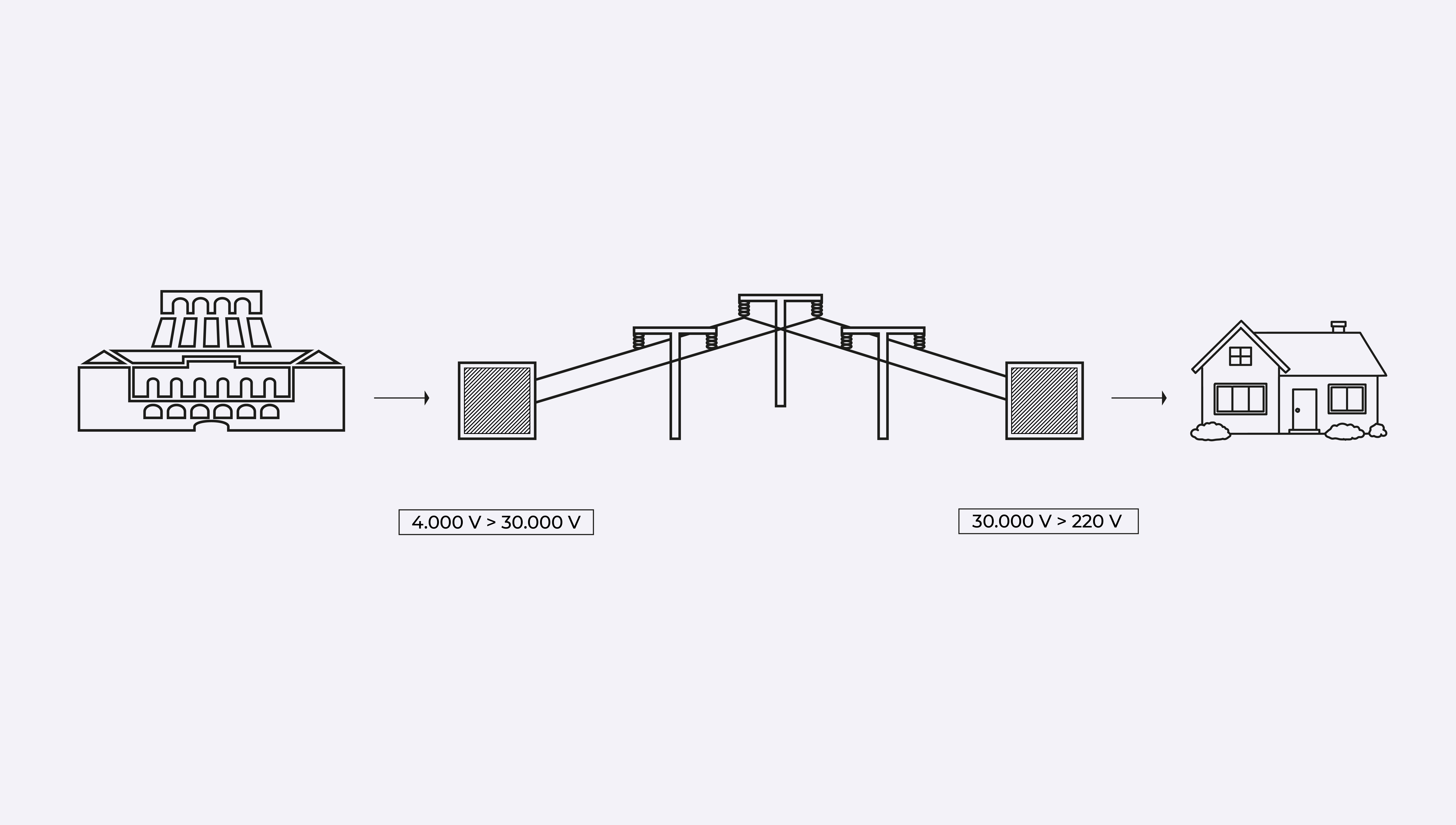
To minimize the loss of electrical energy during transmission along the line, it is necessary to increase the voltage using transformers: by increasing the voltage, in fact, the current is reduced, and so is the heat produced by the same at the expense of the transmitted power.From this window, it is possible to see transformers, used in the Power Station for some auxiliary services. In another part of the facility, now an auditorium, there are the main transformers related to the line.
The Malnisio Power Station generated current at 4,000 V, which voltage was stepped up to ,000 V. Later, the transmission voltage along the line was increased to 60,000 V.
What are Voltage and Current?
Electric voltage is a measure of the energy available to move electric charges from one point to another.
Current intensity, on the other hand, gives us a measure of how many charges are moving and how quickly.
To better understand these two quantities, an hydraulic analogy is often used, which involves imagining a path for a water flow that, from some points of view, behaves similarly to an electrical circuit.
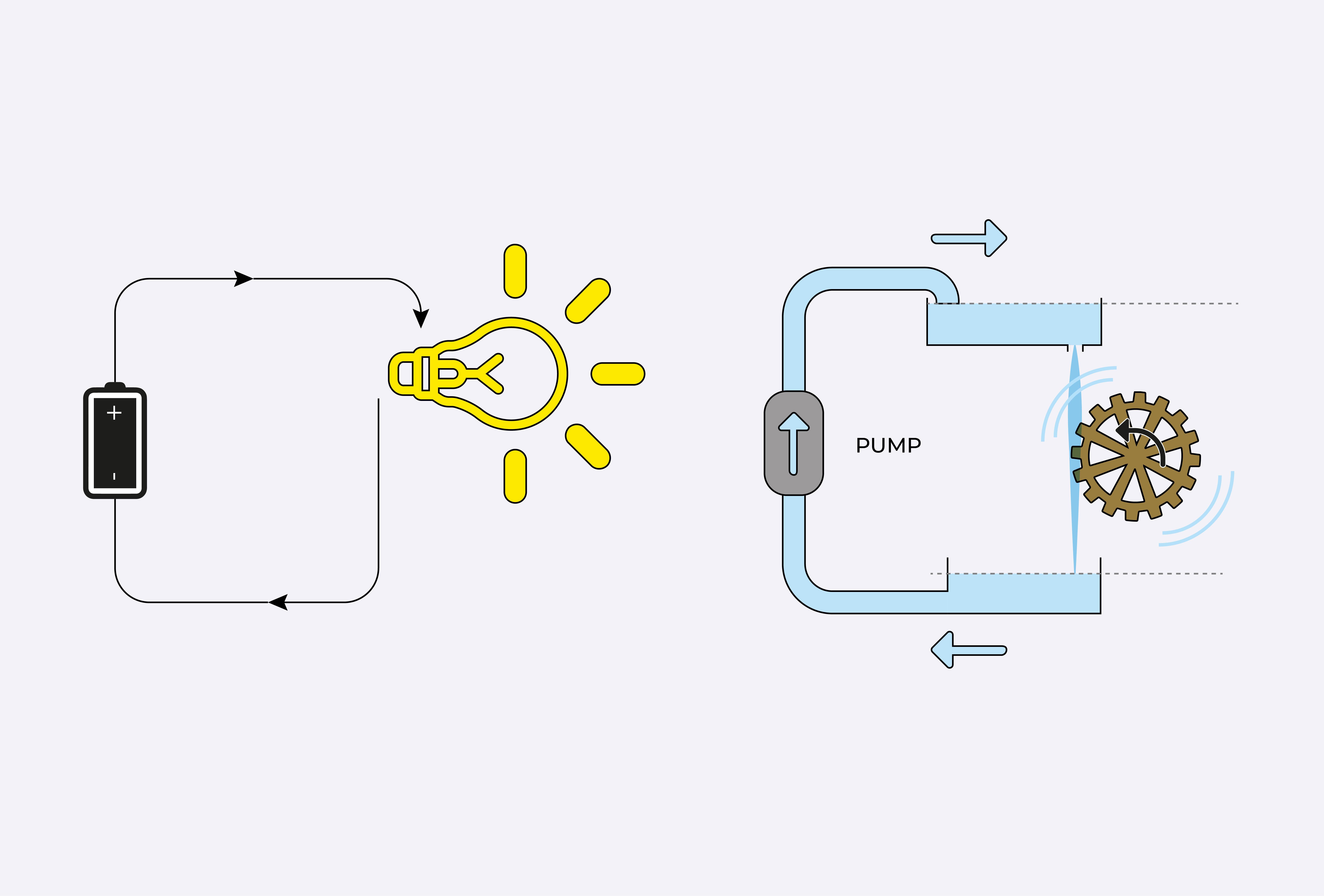
For example, here you see an electrical circuit with a battery and a light bulb: its hydraulic analogue consists of a closed path where water is lifted by a pump and then falls, making a water wheel move.
In this analogy, the flow of water corresponds to the electric current, and the electric voltage corresponds to the pressure difference between two points in the liquid. These analogies are useful to understand the meaning of some quantities and to visualize invisible phenomena, but it is important to remember that they are two very different phenomena and not to overextend in finding similarities.
Current intensity, on the other hand, gives us a measure of how many charges are moving and how quickly.
To better understand these two quantities, an hydraulic analogy is often used, which involves imagining a path for a water flow that, from some points of view, behaves similarly to an electrical circuit.
For example, here you see an electrical circuit with a battery and a light bulb: its hydraulic analogue consists of a closed path where water is lifted by a pump and then falls, making a water wheel move.
In this analogy, the flow of water corresponds to the electric current, and the electric voltage corresponds to the pressure difference between two points in the liquid. These analogies are useful to understand the meaning of some quantities and to visualize invisible phenomena, but it is important to remember that they are two very different phenomena and not to overextend in finding similarities.